

Industry POV
Guest photos and reviews: getting them, and being allowed to use them
The useful part of UGC for a restaurant is mechanical: when to ask, what you are actually allowed to repost, and which format is worth the most.
 Harry Soar23 August 20263 min read
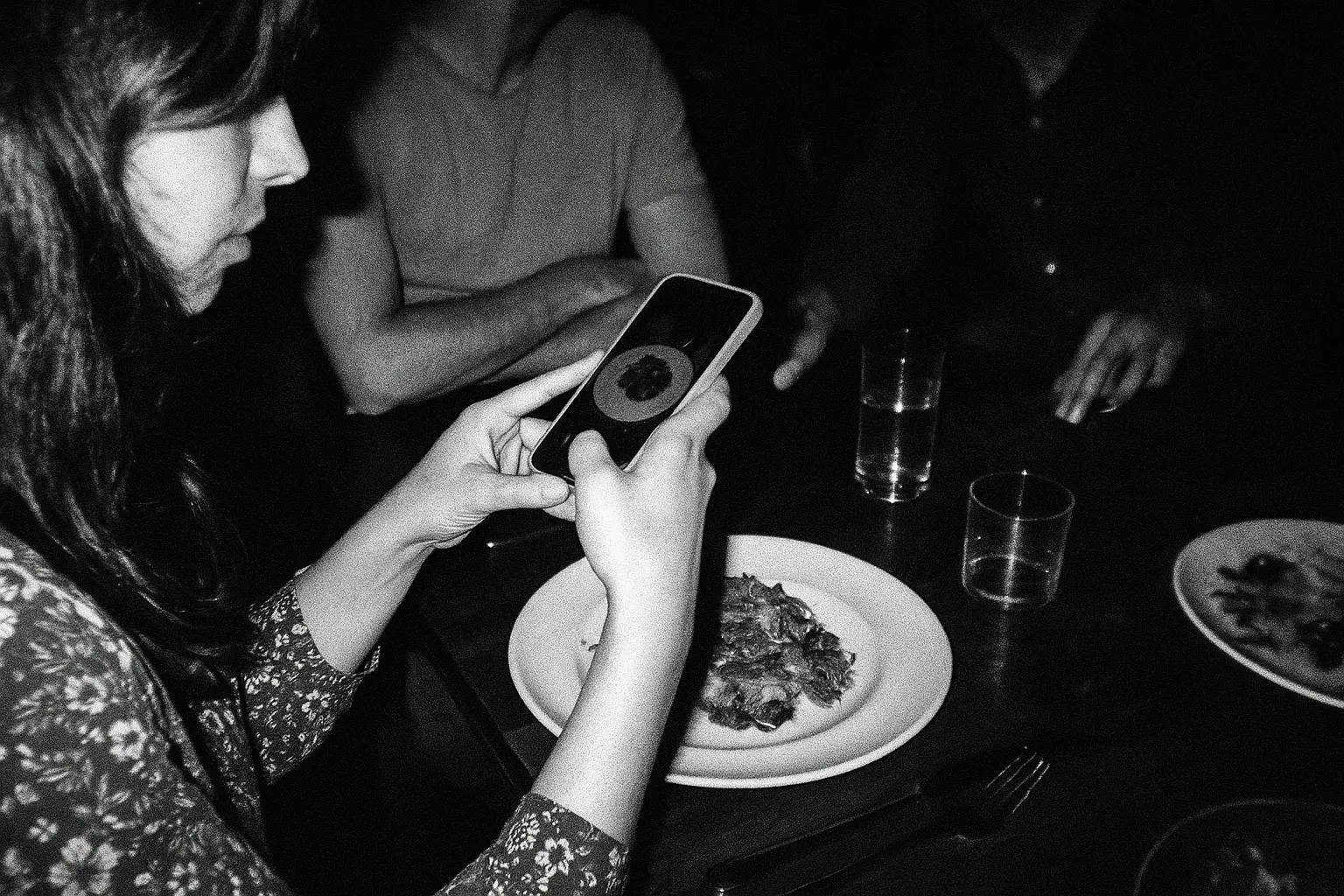
Most writing about user-generated content for restaurants argues that it is valuable. Operators already believe that. The part nobody covers is the mechanics: when the ask actually lands, what you are legally allowed to do with what you get, and which format is worth chasing first.
Not all of it is worth the same
Three things get filed under UGC and they are not close in value.
- Reviews are the most valuable, because they are the only one that shows up where people are deciding. A review sits in search results and in maps, next to your name, at the moment someone is choosing between you and the place two doors down.
- Tagged photos reach that person's followers, which is a real audience but not one that is currently choosing a restaurant.
- Untagged photos are worth almost nothing to you until somebody finds them, which is why the tag matters more than the photo.
If you can only build one habit, build the review one.
The ask has a window, and it is short
Willingness to say something nice about a meal decays fast. The person who would happily leave a review while still at the table, or ten minutes after a collection order they enjoyed, will not do it two days later from an email.
That is the whole reason ordering and reviews belong in the same system. You know who ordered, what they ordered, and when it landed, so the ask can go out inside the window rather than on a Tuesday batch send. It can also skip the people whose order went wrong, which the batch send cannot. Smart reviews is our version of this.
Two things that make the ask worse: asking everyone regardless of how the order went, and asking more than once. Both train people to ignore you.
You need permission, and a tag is not permission
The part that gets skipped. Someone tagging your restaurant in their photo is not the same as giving you a licence to use it in your marketing. The photo belongs to whoever took it. Reposting it to your own feed with credit is normally fine and normally welcomed. Putting it on a paid ad, a menu, a poster or your homepage is a different thing and needs an actual yes.
The practical version is unglamorous: reply to the person, ask if you can use it and where, and keep the reply. It takes a minute and it is the difference between a nice photo and a problem. If you are collecting at any scale, say what you will do with submissions at the point you collect them.
The same applies to faces. A photo of a full dining room contains people who did not agree to be in your advertising.
What to actually do with it
Guest photos are usually better than studio shots at one specific job: showing the portion, the room and the light as they really are. That makes them useful in the places where a customer is deciding whether to order, rather than in the places where you are describing yourself.
So: the ordering menu, where a real photo of the dish sets an honest expectation. The collection or delivery confirmation. The venue page. Less useful on the homepage, where nobody has picked a dish yet. Item photos and videos is where the menu-level version of that lives.
The one metric worth watching
Not follower count and not volume of submissions. Watch the rate: what share of completed orders produce a review. That number tells you whether the ask is landing in the window, and it is the only one of these figures that responds to something you control.
Our side of it is smart reviews, and the takeaway system is where the order data that makes the timing possible sits.
Questions operators ask
What counts as user-generated content for a restaurant?
Reviews, tagged photos and videos from guests, and untagged posts that mention you. They are not equal in value: a review appears in search results and maps at the moment someone is choosing where to eat, while an untagged photo reaches nobody who is looking for you.
When is the best time to ask a customer for a review?
Inside the window while the meal is still fresh, so at the table or shortly after a collection or delivery order landed. Willingness decays quickly, which is why a batch email days later performs poorly and why the ask works best from the system that knows when the order actually completed.
Can a restaurant repost a customer's photo?
A tag is not a licence. The photo belongs to whoever took it. Resharing to your own feed with credit is normally fine and usually welcomed, but using it in paid advertising, on a menu, a poster or your homepage needs explicit permission. Ask, and keep the reply. The same applies to recognisable faces in the shot.
Where do guest photos work better than professional photography?
Anywhere a customer is deciding what to order, because a guest photo shows the real portion, room and light. That means the ordering menu and the venue page rather than the homepage, where nobody has chosen a dish yet.
More from the blog
Choosing delivery apps
Work out whether a marketplace order makes you money before you argue about which one to join. The arithmetic, the marketing argument that usually is not one, and where a direct channel fits.
Harry Soar · 23 August 2026 · 4 min read
Read post →
Just Eat alternatives
Four different things get called a Just Eat alternative and they solve different problems. Which one you want depends on whether you are replacing the demand, the delivery, or the ordering.
Harry Soar · 23 August 2026 · 3 min read
Read post →
EPOS for takeaways
The three systems most takeaways look at first came out of card readers, not kitchens. What that means in a rush, and what to compare before you commit.
Harry Soar · 23 August 2026 · 2 min read
Read post →
Ready to
move?
Free to set up, live the same day, and your guest list comes with you.